 Drawn light
How to draw a stork our recommendations will be discussed in this article! People have created many legends about the stork, and in all of them, it is a symbol of kindness and happiness. The belief that it brings babies is one of the most enduring myths in cultural history. In the old days, in many villages from Holland to the Balkans, almost every house could boast its own stork’s nest. And even today, homeowners are happy when a stork settles in their yard. In France, for example, where storks have not become part of local folklore, the white stork is becoming a rarity, although it used to be found in great numbers.
There are only 17 species of storks on Earth. Two species of storks live in our country: the white stork and the black stork. Unlike herons, storks prefer drier habitats. Their favorite food, like that of herons, includes frogs, snakes, mollusks, newts, lizards, large insects, turtles, fish, birds, rodents, and even baby hares. All day long, these beautiful, large birds roam meadows or forest glades in search of prey.
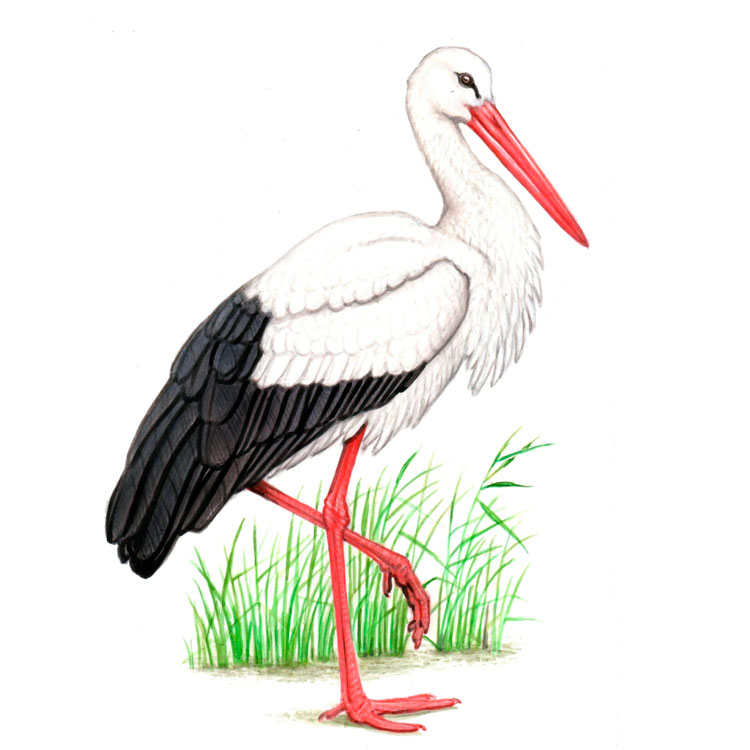
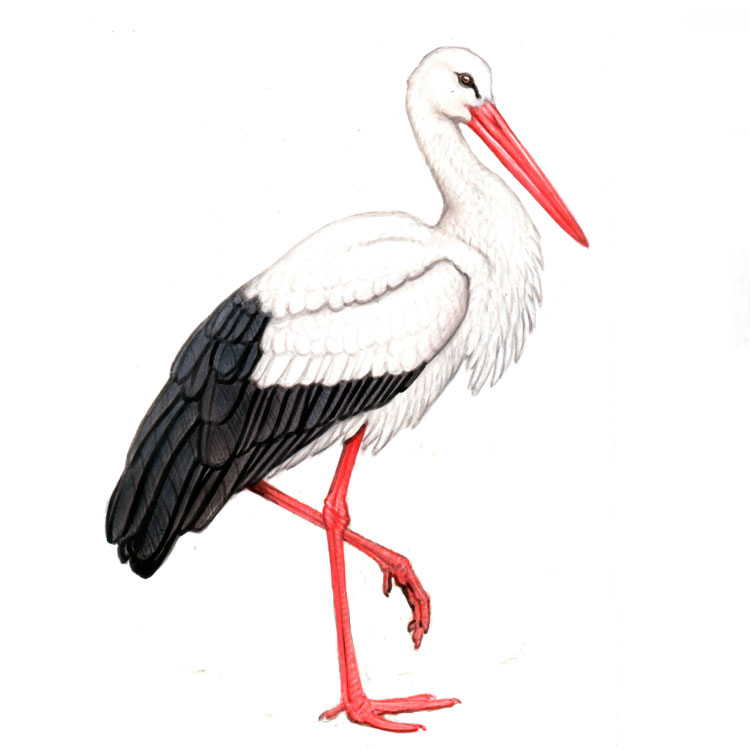
The white stork has long been accustomed to living alongside humans. It settles on rooftops and other elevated spots, even on power line poles. People have studied it quite well. The appearance of this large, long-legged, white bird with black wings, a long neck, and a long beak is familiar to everyone from the pages of a primer. In flight, the stork is easily distinguished from herons by the way it stretches its neck. It likes to rest while standing on one leg.
Drawing a stork is a fun and interesting process! Storks are cautious birds, but in most of their habitats, they benefit from human hospitality and therefore quickly become accustomed to settled areas. Storks feed on a variety of foods found in wet, marshy areas. In southern Kazakhstan, they consume large quantities of locusts. They also feed their chicks with locusts; there are usually four chicks, rarely more or fewer. Storks winter in Africa and South Asia, where they migrate in September–October. They return in February–March.
The black stork differs from its white counterpart in the plumage of its back, head, and neck, as well as in its entire way of life, from habitat to attitude toward humans. The black stork is a loner. It prefers to nest alone, far from its kin, retreating to the most secluded corners of the forest.
In southern Kazakhstan, storks arrive as early as late February or early March. They usually nest in trees; in the mountains, they often nest on cliffs, but never more than 10–15 km from a body of water. Both birds typically incubate the eggs for about 40 days. There are usually four chicks, sometimes five or six. They feed them for over two months, bringing them fish, frogs, lizards, and invertebrates. The migration to wintering grounds begins in August and ends in October. Until recently, it was believed that storks had no voice, but it turned out that this is not the case. They simply use them very rarely. In addition, they make sounds by clicking their beaks.
Let’s get started on drawing a white stork right now!
How to draw a stork easy
Step 1
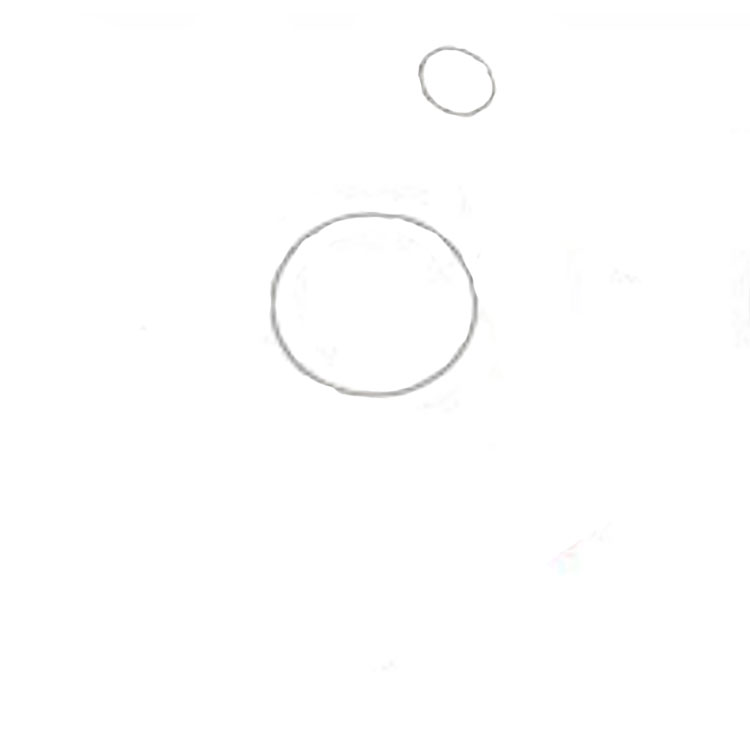
Our starting point for drawing a stork is a circle—the central part of its body!

Step 2
Next, in the upper right corner of the drawing, we’ll draw a small oval—this will be our bird’s head!
Step 3
Here, we simply connect the oval and the circle with a curved line!

Step 4
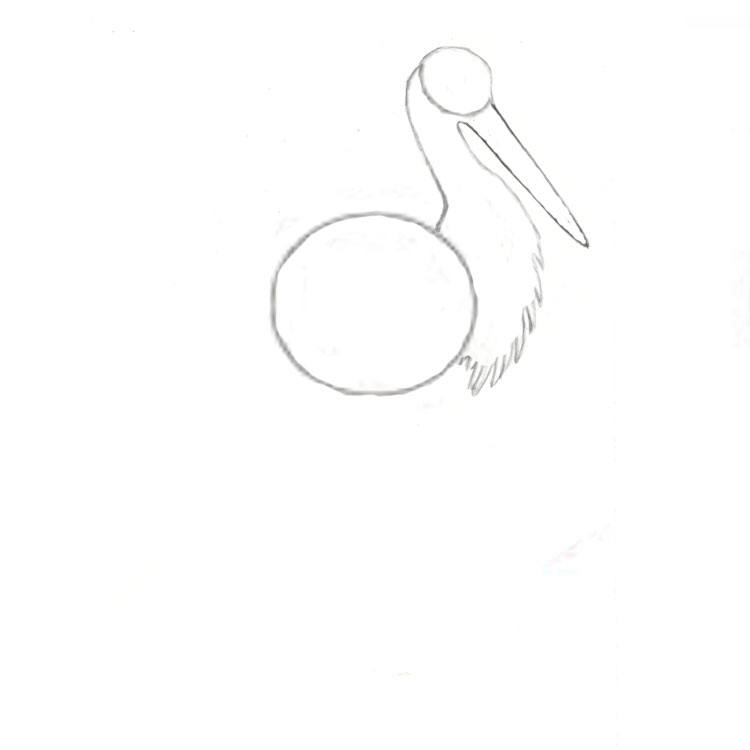
At this stage of the drawing, we’re creating the outline of the stork’s beak and chest!
Step 5
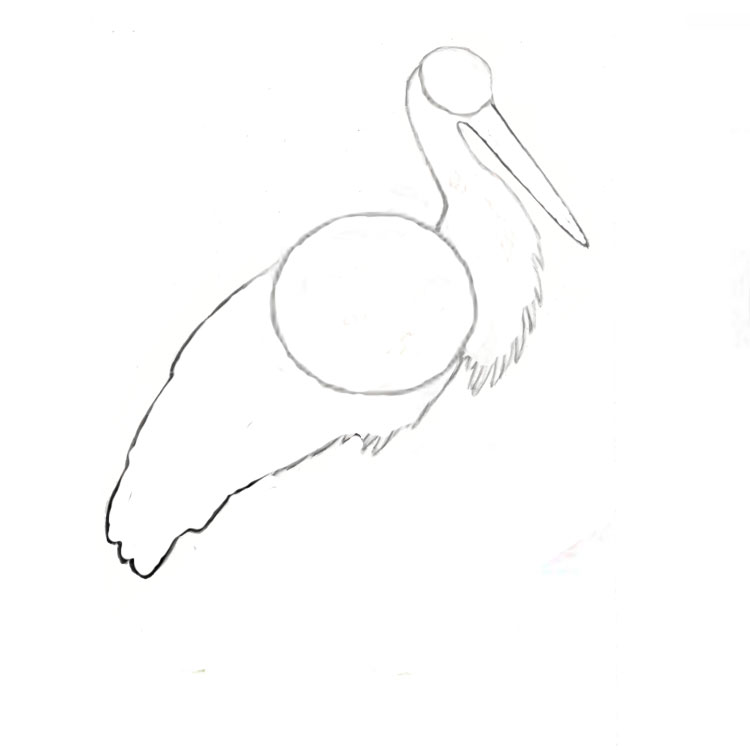
Let’s just sketch the outline of the bird’s rear!
Step 6
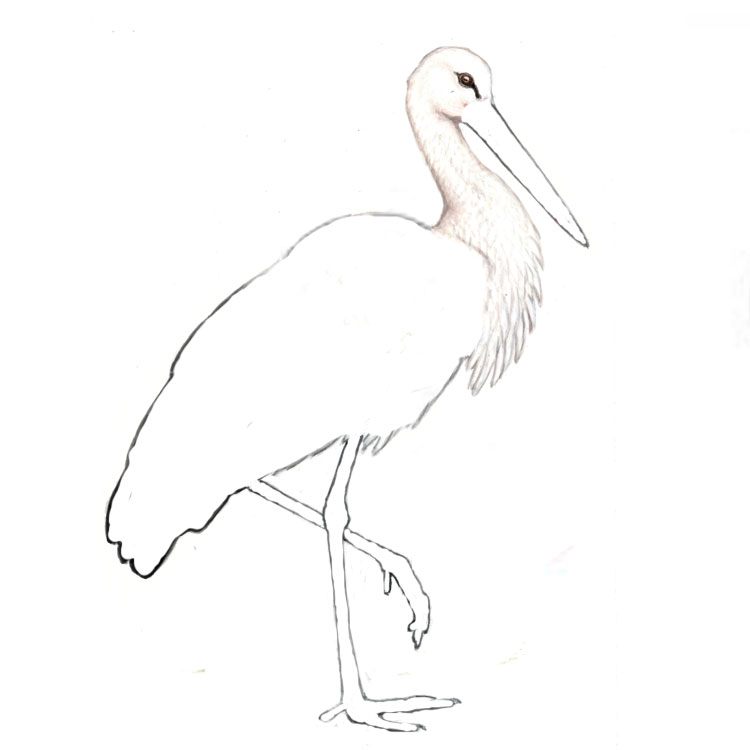
Let’s remove the extra guide lines—the central circle—and draw the outline of the stork’s legs!

Step 7
In this step, we’ll start coloring the head and chest of our beautiful bird in bright colors!
Step 8
Next, we’ll color the beak and legs in shades of red! We’ll also darken the upper part of the stork’s plumage!

Step 9
In this step, we’ll add light tones to the central part of the feathers!

Step 10
And at this stage, we’ll shade the rest of the stork’s feathers in black and brown tones!
Step 11
And in the final step, we simply create a green background that looks like grass!