 Drawn light
How to draw a galaxy this question is asked by many curious people! Galaxies are incredibly fashionable in the earth at the moment, and picture on a universe is far simpler than you might imagine. You can exercise different mediums which you’re the majority at ease with like work of art, acrylic cover, inks, as beautiful as markers!
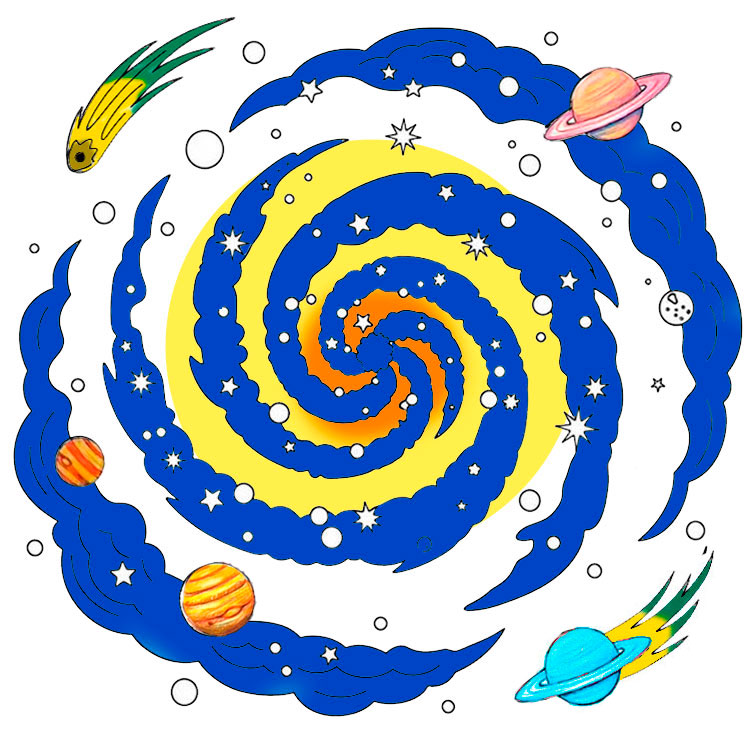
This picture explains the essence of the structure of the galaxy

To successfully draw a galaxy, you need to understand how it looks in a vertical section and horizontal projection! The sun is shown separately to help you understand the size of the galaxy and the size of our sun!
A galaxy is a vast accumulation of stars, interstellar gas and dust, planets, comets and asteroids, black holes, and dark matter, all bound together by gravity. The exact number of galaxies in the observable universe remains unknown. According to generally accepted scientific estimates as of 2024—based on data from the *New Horizons* spacecraft—there are several hundred billion galaxies in the universe.
Galaxies are distributed unevenly in space: some regions contain entire groups, while others—known as voids—are devoid of galaxies. They exhibit a wide variety of shapes, including spherical elliptical galaxies, disk-shaped spirals, barred spirals, lenticular galaxies, dwarf galaxies, and irregular galaxies.
From Earth, depending on the hemisphere, four galaxies are visible in the night sky: the Andromeda Galaxy, the Large and Small Magellanic Clouds, and the M33 galaxy. In 1610, using a telescope, Galileo Galilei discovered that the Milky Way is composed of a vast number of faint stars.
There are many ways to draw a galaxy, but here we’ve presented the most common one! In a 1755 treatise based on Thomas Wright’s work, Immanuel Kant hypothesized that the Galaxy might be a rotating body made up of a vast number of stars held together by gravitational forces—similar to those acting within the Solar System, but on a much larger scale. From a vantage point inside the Galaxy (specifically, within our Solar System), the resulting disk would appear in the night sky as a band of light. Kant also hypothesized that some of the nebulae visible in the night sky might be separate galaxies.
The detailed study of galaxies began relatively recently in the context of the entire history of astronomy. Until the early 20th century, scientists lacked a clear understanding of the true nature of the nebulae observed in the night sky. These objects, often appearing as blurred patches, were long considered merely clouds of interstellar gas within the Milky Way.
In 1910, using the 60-inch telescope at Mount Wilson Observatory, George Ritchey obtained images revealing that the spiral arms of large nebulae were studded with star-like objects; however, the images of many of these were indistinct and hazy. They could have been compact nebulae, star clusters, or merged images of multiple stars. A pivotal moment in understanding the nature of galaxies occurred in the 1920s.
Using the most powerful telescope of the time—located on Mount Wilson—American astronomer Edwin Hubble demonstrated that many of the observed nebulae were, in fact, separate galaxies situated beyond our own. Hubble also established that the Universe is expanding, having discovered a relationship between the distance to galaxies and the speed at which they recede from Earth. This discovery marked a major milestone in astronomy and laid the foundations for modern cosmology.
Let’s start drawing a galaxy right now!
How to draw a galaxy easy
Step 1
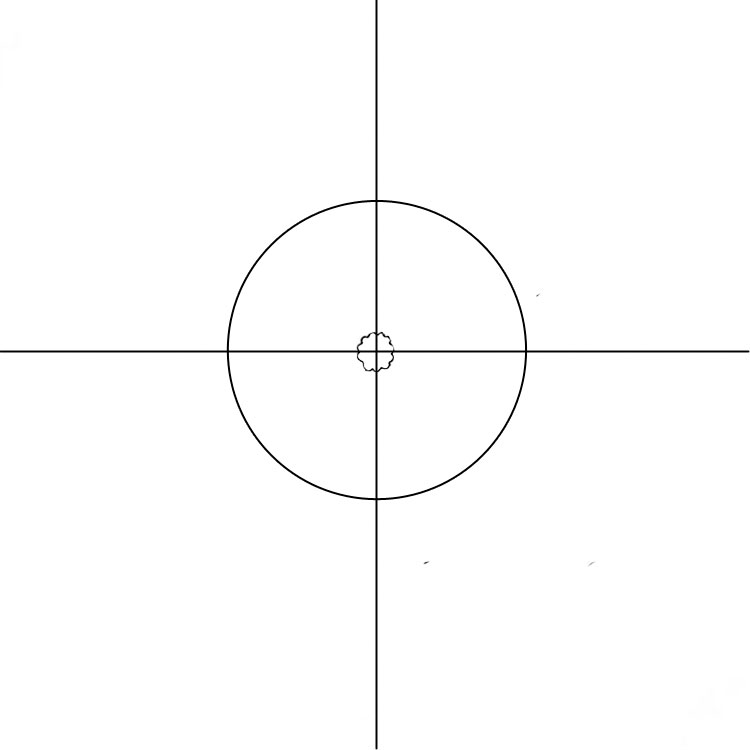
To draw a galaxy easily and simply, we need guide lines—one vertical and one horizontal that intersect at the center.

Step 2
At the intersection of the two auxiliary lines in the center, we draw the outline of a small circle (this is the center of the galaxy; in most cases, a black hole is located there).

Step 3
Here, we’ll transform this circle in the center into a curved circle.

Step 4
Draw another auxiliary circle.
Step 5
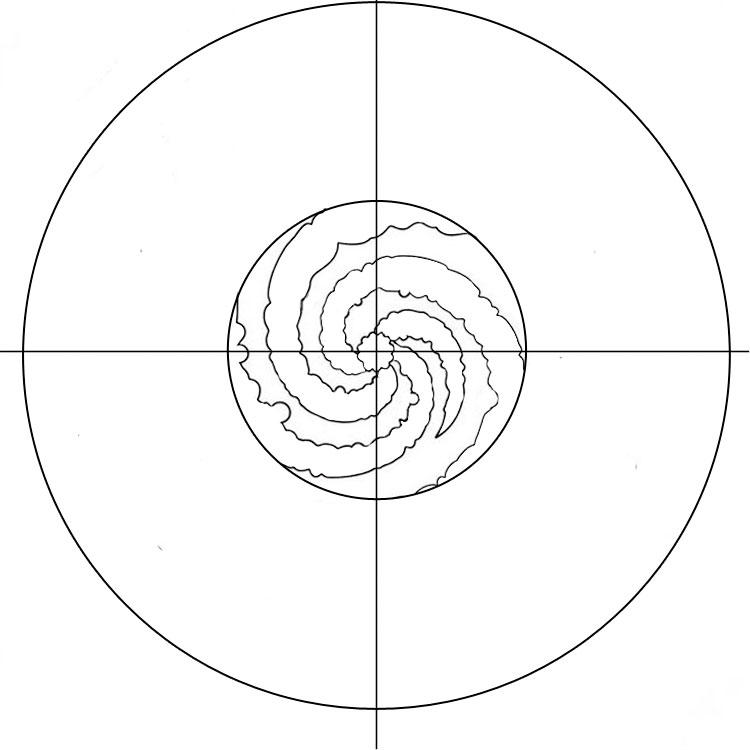
Next, we draw spiral-shaped curved lines radiating from the center of our galaxy—or, more precisely, their outlines (these will represent stars, planets, and other elements of space).

Step 6
At this stage of the drawing, we’re creating a huge circle that forms the edges of the galaxy—it will look like the “optical sight” on a rifle!
Step 7
Next, let’s sketch the outlines of the galaxy’s edge elements!

Step 8
In this step of the drawing process, we simply remove the auxiliary drawing elements: the medium and large circles, as well as the vertical and horizontal lines.
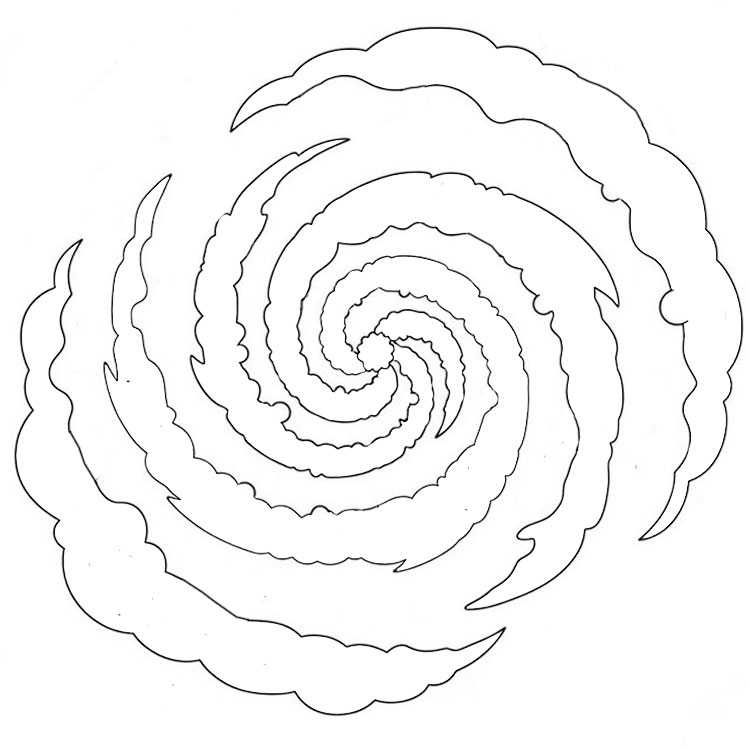
Step 9
Here, we’re drawing the outlines of the planets and the comet in our beautiful drawing.
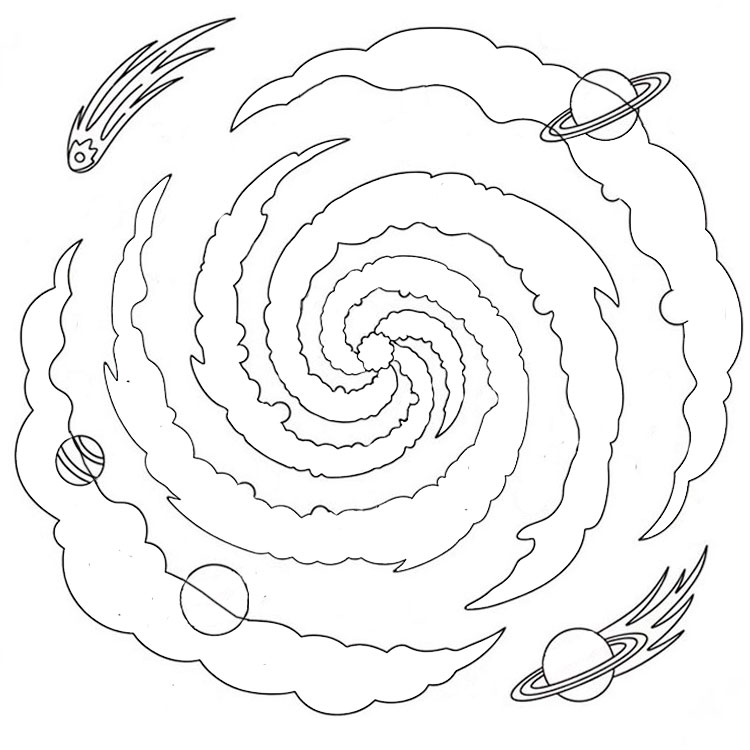
Step 10
And at this important stage of the drawing, we create the outlines of the galaxy’s many elements: stars, planets, and comets.
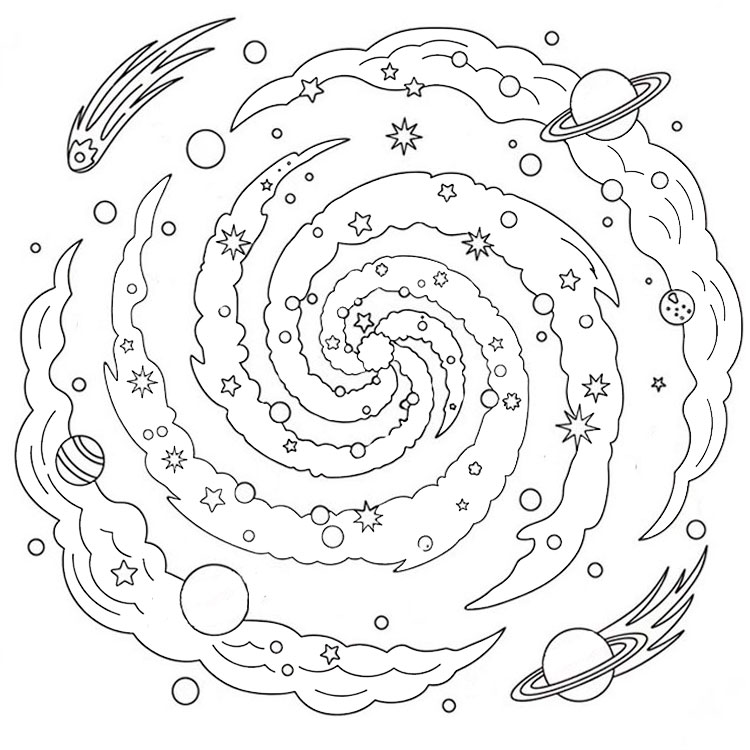
Step 11
Let’s start coloring our galaxy in bright yellow and light brown shades.

Step 12
And here we’re coloring the spiral-shaped central part of the galaxy a bright blue

Step 13
And now we’ll finish coloring the galaxy with its celestial bodies: comets and groups of planets.