 Drawn light
How to draw a snowman the color version is described in this article. One character many people associate with winter and the New Year is the snowman. Winter, with its icicles, snowdrifts, and frosted windows, already feels a lot like a fairy tale, and now, as if by magic, little snowmen are appearing in every yard. Evidence suggests the credit for creating the first snowman belongs to the outstanding Italian sculptor Michelangelo Buonarroti.
Apparently, one day in 1493, he grew tired of working with stone and decided to create something from a more malleable material—to try his hand at working with snow. Whether this is true or not, there is no one left to confirm it. Time has passed, and the details are very vague.
The first written mention of a “giant, beautiful snowman” was found in an 18th-century book. Later, illustrations of our hero began to appear. The first illustration appeared in a German children’s songbook, and our hero was given the name “schneeman,” which translates as “snowman” or simply “snow figure.”
Originally, snowmen were not known for their kind and gentle nature; they were monsters that harmed people. They were sculpted as ferocious snow monsters of enormous size. It’s hard to blame medieval Europeans for this, since harsh winters with bitter cold and blizzards did little to lift one’s spirits.
We’ll draw a snowman using basic shapes—circles. The belief took hold that these snowy monsters posed a real threat to people. It was thought that building snowmen at midnight was very dangerous; it was said to bring nightmares and night terrors and generally lead to all sorts of misfortunes. In Norway, it was not recommended to look at a snow figure through a curtain, and encountering one at night did not bode well for one’s journey—one had to turn back or go around it.
Gradually, snowmen took on a friendlier image. By the 19th century, snow figures were already being used to decorate Christmas and New Year’s celebrations. It’s worth mentioning another aspect of snowmen here. In some European legends, they are described as a means of fighting demons. A snowman is a messenger from heaven, since snow falls from the sky.
Many people confided their secrets to snowmen, made wishes, and when the time came, the snowman would melt and, like a mailman, deliver those cherished thoughts up to the heavens. These established, wholesome traditions took root. People began placing snowmen next to their homes, and Europeans have already surpassed the rest of the world in the art of decorating snowmen: they lavishly adorn them with garlands and household items, wrap them in scarves, and always give them brooms. Naturally, a mystical element remains in all of this.
In Romania, people use garlands made of garlic cloves as decorations, which promote good health and ward off the machinations of dark forces (today, amid the pandemic, this is likely especially relevant).
Fairy tales have played a major role in shaping the positive image of snowmen. Hans Christian Andersen stood out in particular. His fairy tale “The Snowman” has remained, century after century, a small New Year’s fairy-tale masterpiece. And one more thing: for Europeans, there is no difference between a snowwoman and a snowman—they are all male.
Let’s start drawing a snowman right now.
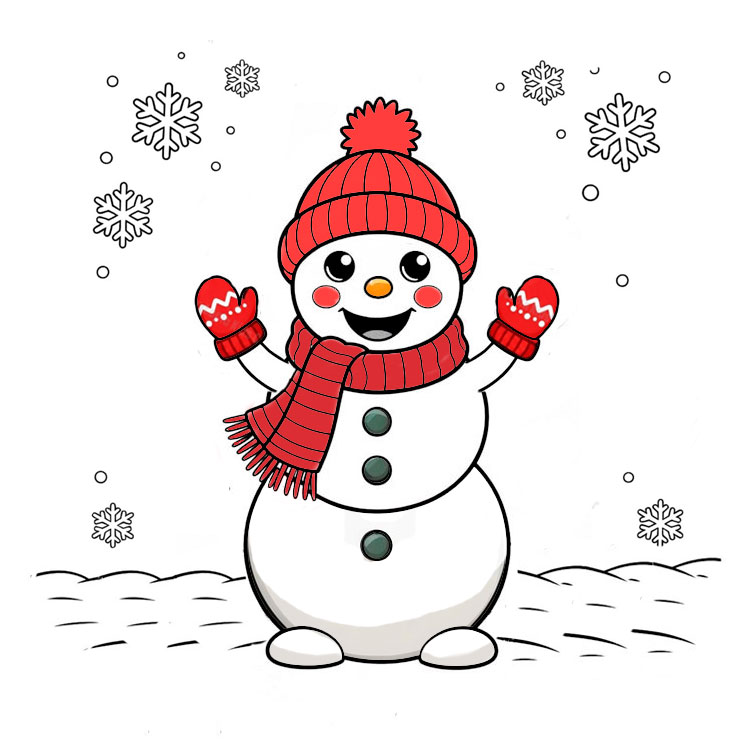
How to draw a snowman easy
Step 1
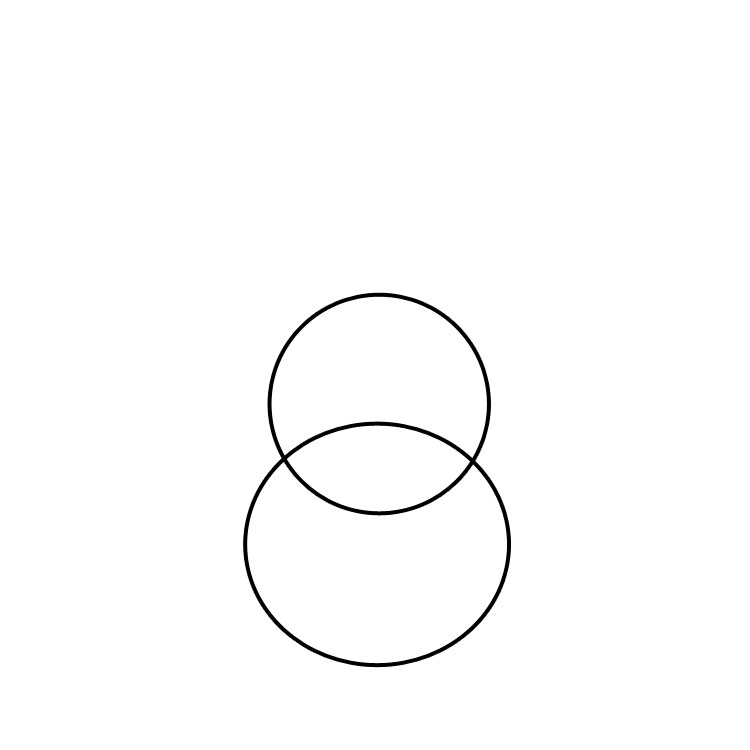
To draw a snowman successfully, we need some auxiliary elements—in this case, circles.

Step 2
Below the first circle, we draw a second circle. The top circle will be the middle part of the snowman’s body, and the bottom circle will be the lower part of the snowman’s body.
Step 3
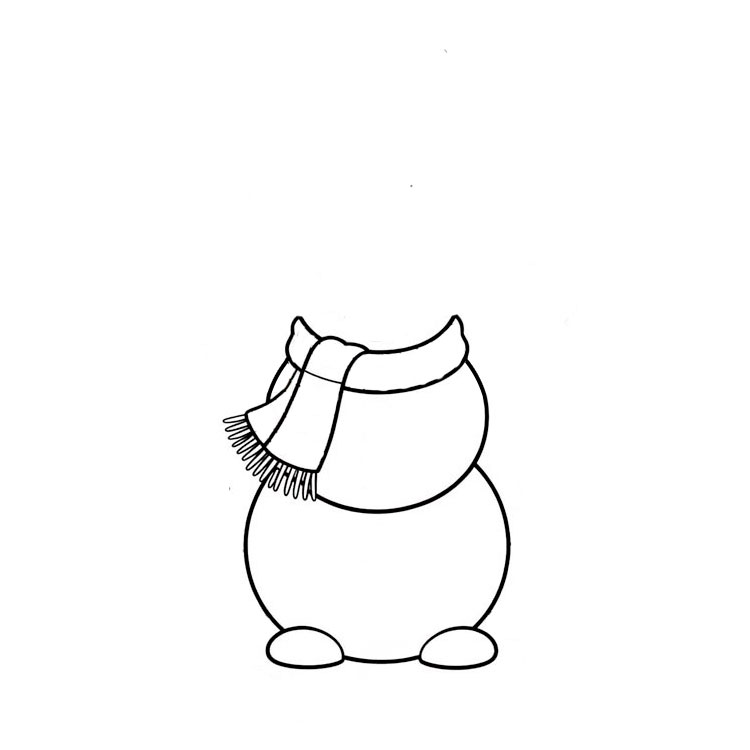
In this step of the drawing, we remove some of the guide lines and finish drawing the snowman’s legs.

Step 4
Next, we’ll remove some of the lines from the top circle and draw a scarf for our favorite snowman.
Step 5
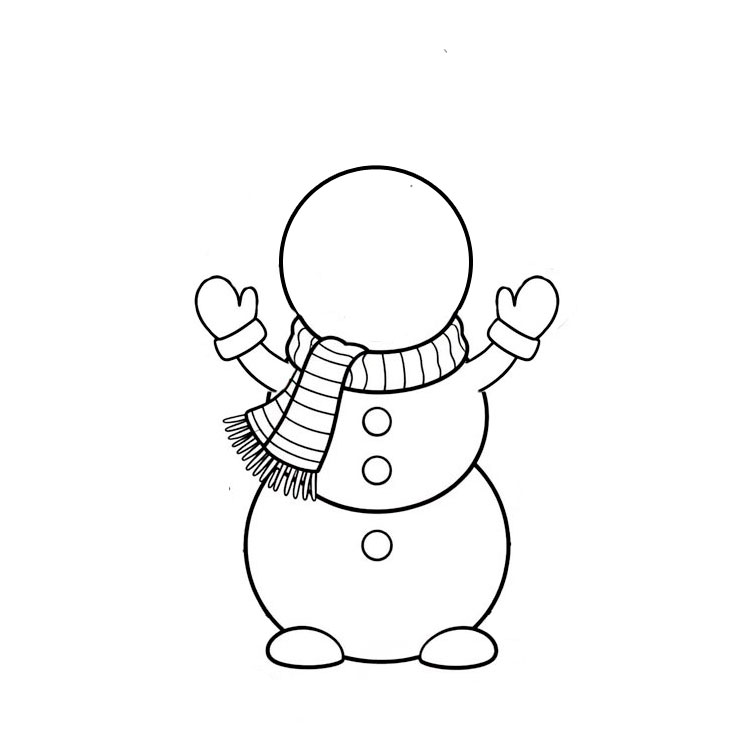
At this stage of the drawing, we’ll draw a circle where our character’s head will go.

Step 6
Next, we draw beautiful hands with mittens and the outlines of three buttons.
Step 7
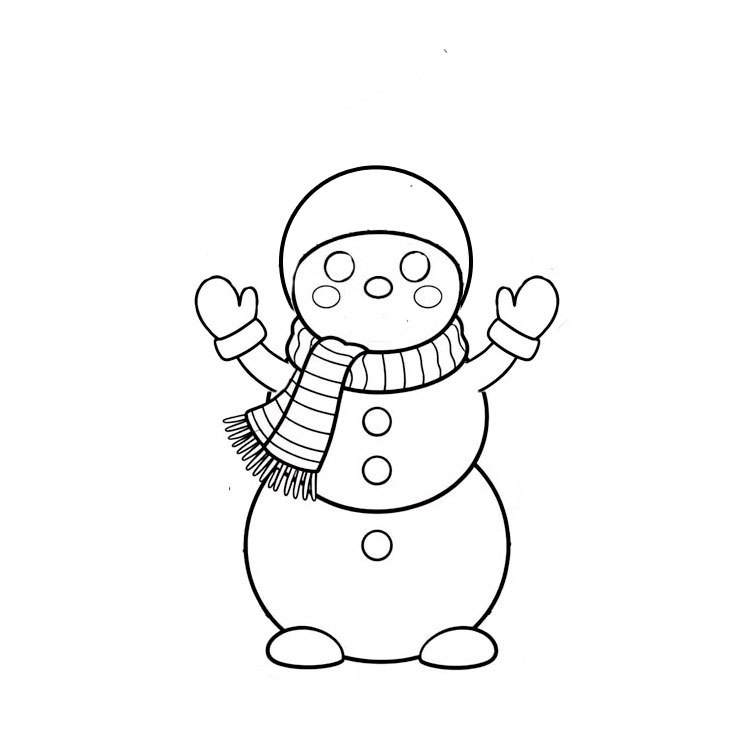
In this step of the drawing, we’ll create the outlines of the eyes, nose, cheeks, and the bottom of the hat.
Step 8
Next, we’ll add more detail to the eyes and mouth, giving them a darker shade.

Step 9
Here, we’re simply drawing the outline of the snowman’s hat.
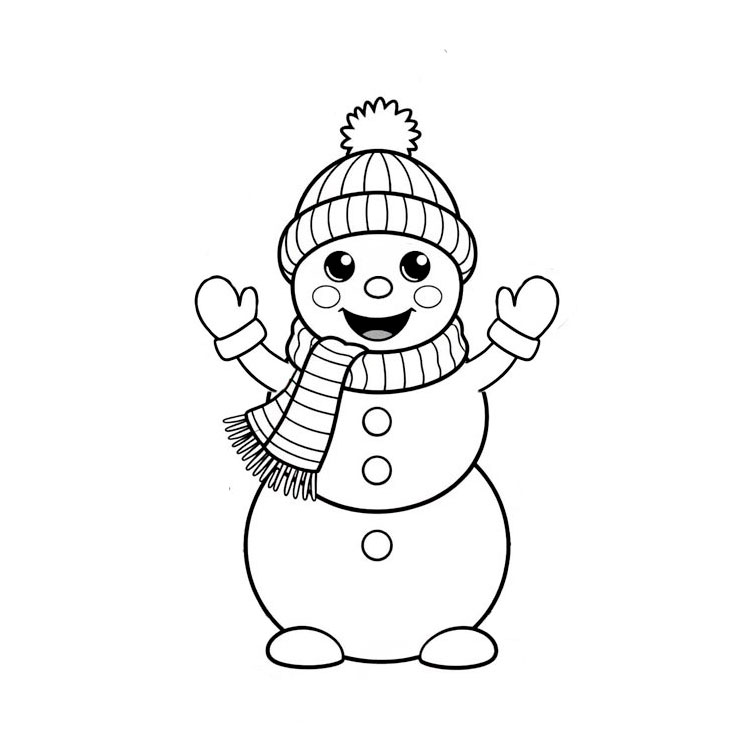
Step 10
Let’s create a beautiful background featuring snowflakes and fluffy snow.
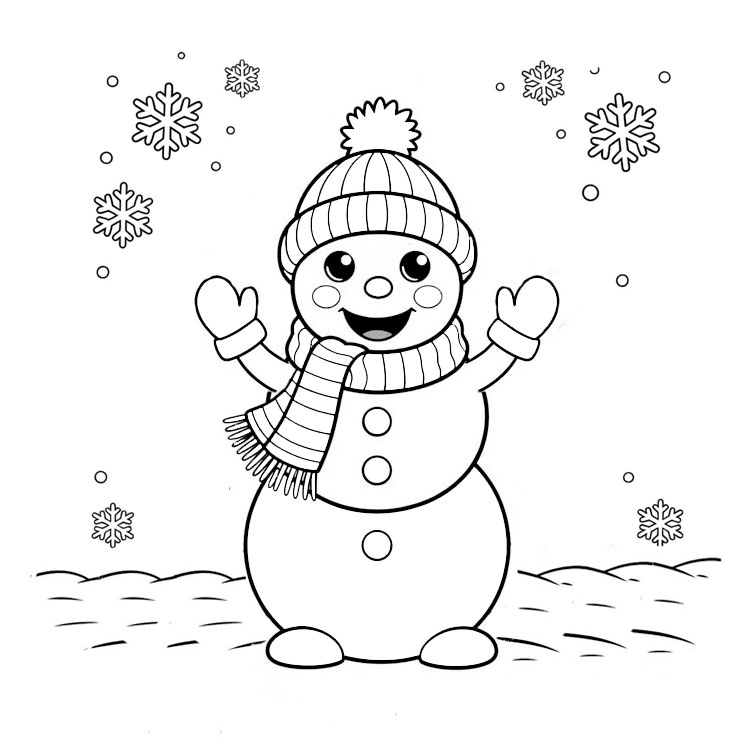
Step 11
At this stage of the drawing, we’ll color our winter character’s hat a shade of red.
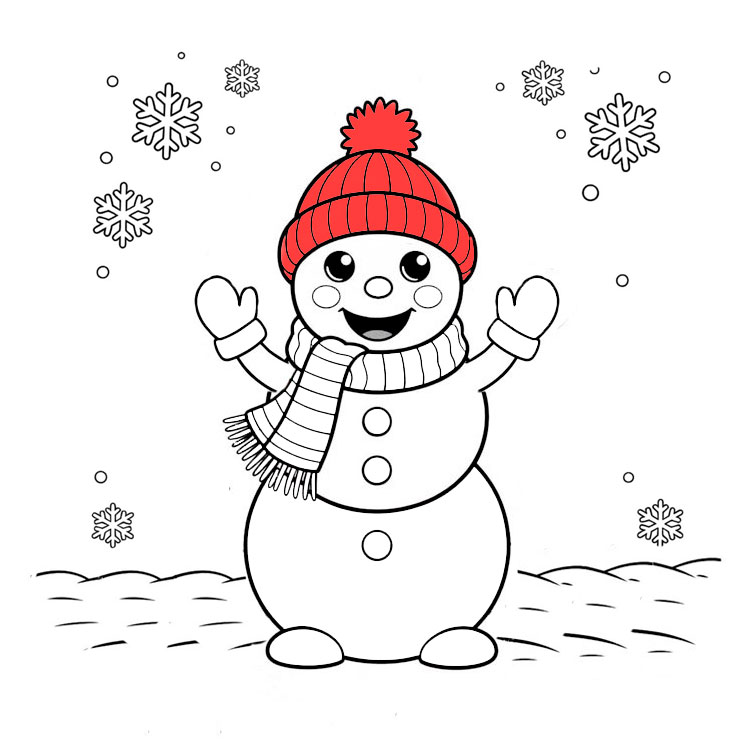
Step 12
In the same way, we coloring the mittens with red colors. As well as noses, cheeks, and buttons in bright colors.
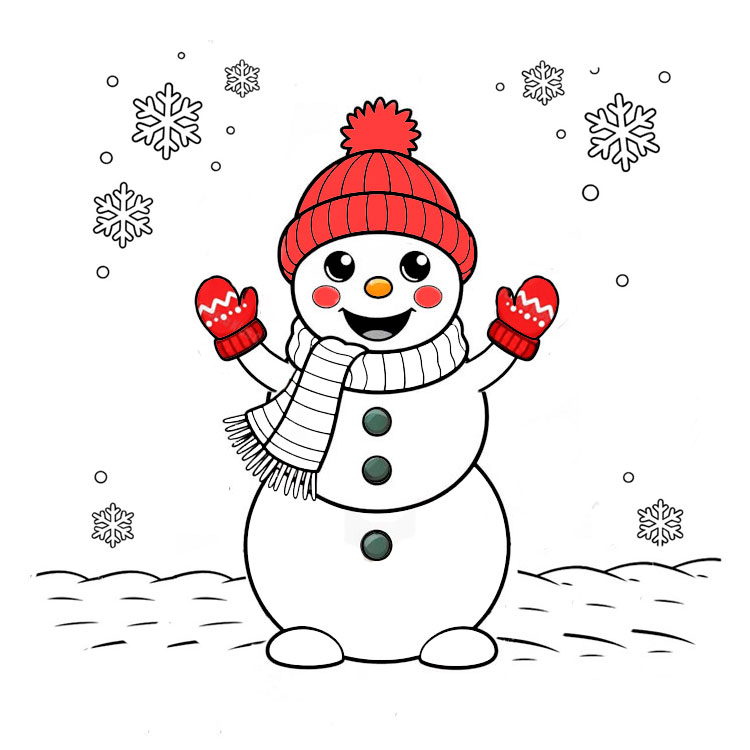
Step 13
And now we’ll finish by coloring our cute snowman’s scarf a shade of red.