 Drawn light
Volcano drawing in 2 versions will be described in this article! Volcano (on behalf of the ancient Roman god of fire Vulcan) – the formation on the surface of the Earth (or other planets), from which magma flows under the influence of tectonic processes. When the leaking magma – lava – solidifies, various rocks are formed, which are called igneous. Volcanoes can vary in shape, location, activity, type of eruption, lava composition, and other indicators.
Scientists distinguish active, sleeping, and extinct volcanoes. The former include those that erupted at least once during the Holocene (a geological era that lasted 12 thousand years before modern times), the latter include volcanoes whose eruption is theoretically probable, and the extinct ones include volcanoes whose magma does not reach the terrestrial surface for many millions of years. Nevertheless, such a classification is not accurate enough, since there have already been cases in history when a volcano considered extinct suddenly began to erupt.
It’s not difficult to volcano drawing. Follow our recommendations! In this tutorial, I intend to show how to draw a volcano with a pencil. The eruption of a volcano is usually remarkable, albeit destructive, all-natural phenomenon, so drawing such a photo is fascinating.
Structure of a volcano
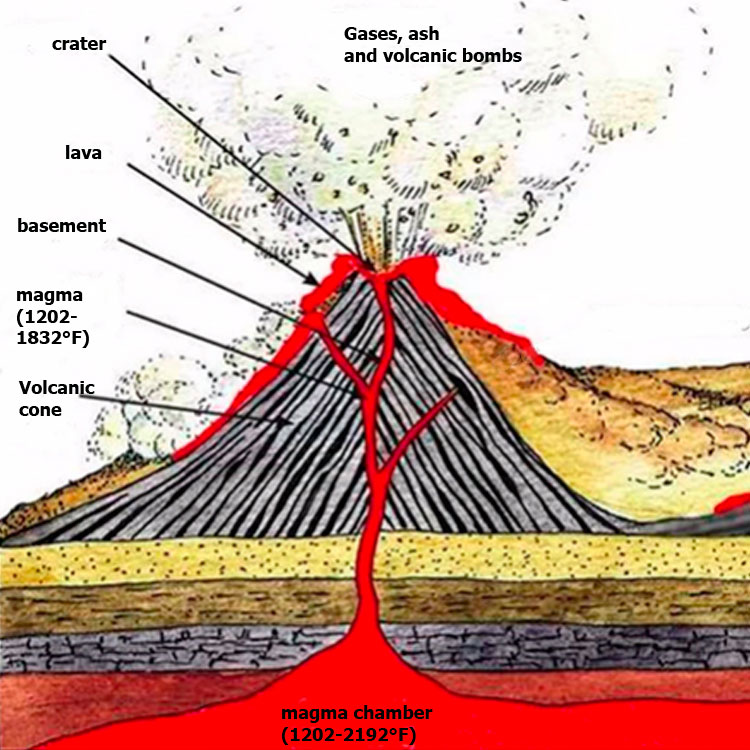
Let’s list the parts of a volcano and describe them. At the top is the crater, a depression that acts as a “gateway” for magma to reach the surface. The reservoir where magma accumulates is located beneath the volcano and is called the magma chamber. There is a channel between the focus and the crater, i.e., a vent. The vent often has a complex shape, similar to the crown of a tree. In places where the side vents reach the surface, side craters are formed.
Magma is an overheated substance from the mantle that has been transformed into a semi-liquid state. As soon as magma pours onto the surface, various gases are released from it, and the magma turns into lava.
Types of eruptions
Depending on the composition of the magma, lava can be liquid, flowing freely down the slopes of the volcano. In this case, a flat or shield volcano of insignificant height is formed. Lava spreads across the terrain, covering crops, forests, and residential areas, evaporating water bodies, and flowing from coastal cliffs into the ocean. Lava fields cover a large area where nothing grows for a long time. If the lava is viscous, it does not spread far and builds up a volcanic cone.
Features of eruptions
One of the most dangerous manifestations of volcanism is hot avalanches, where ash and superheated gases mix. The temperature of the flow reaches 500-800°C at speeds of up to 700 km/h.
Volcano drawing (option 1)

Step 1
As is often done in drawing, we need guide lines to create the volcano, so we’ll draw a vertical line and an oval in the center.

Step 2
Next, we’ll draw the volcano’s crater! In the center, where we had the oval, we’ll simply add a group of horizontal lines.

Step 3
At this stage of the drawing, we’re simply sketching the outline of the volcano’s base.

Step 4
And here we’re just finishing up the top and middle parts of the volcano—or, more precisely, its outline!
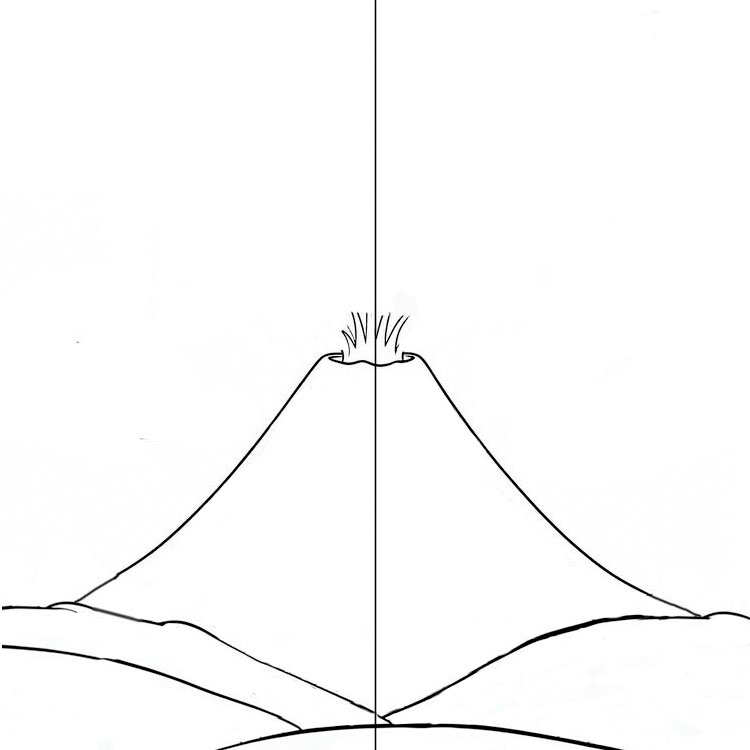
Step 5
In this step of the drawing, we create the outlines of the clouds.
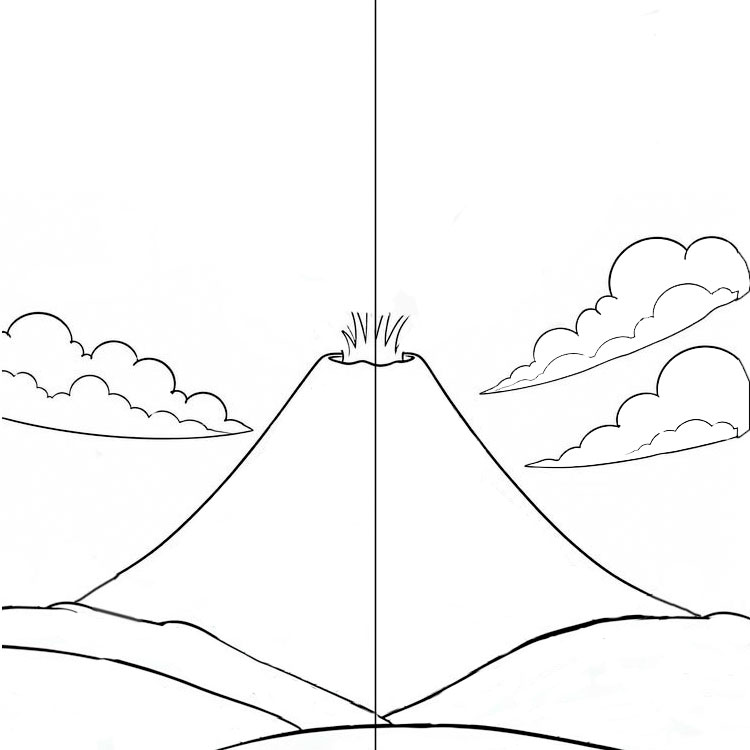
Step 6
Use a regular pencil to shade the top and bottom of the volcano.
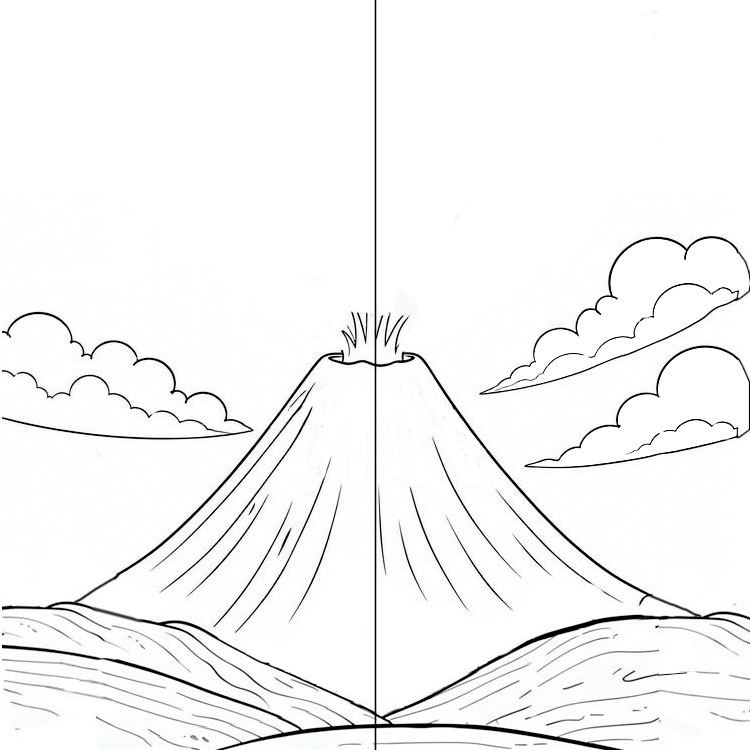
Step 7
At this stage of the drawing, we are creating the outlines of the lava flows descending from the volcano’s crater.
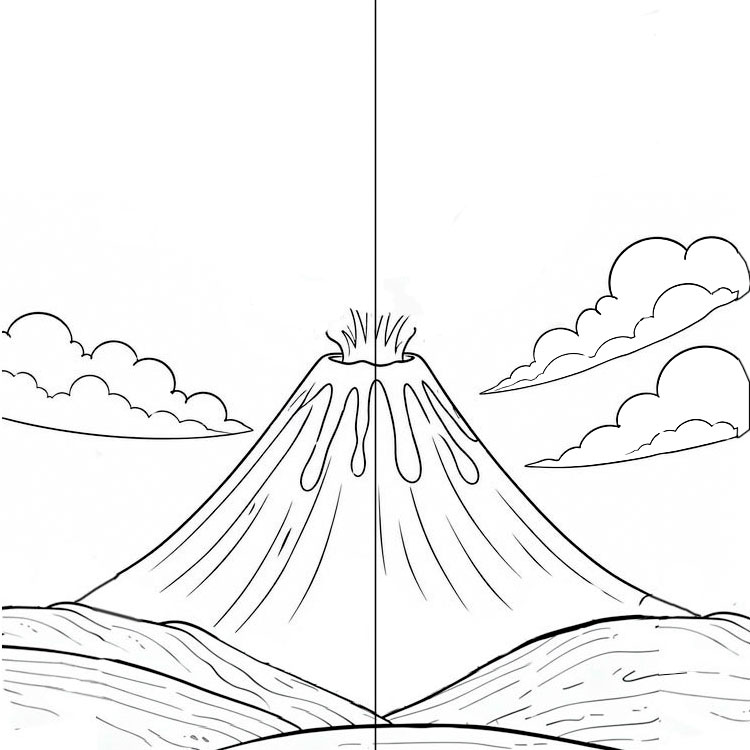
Step 8
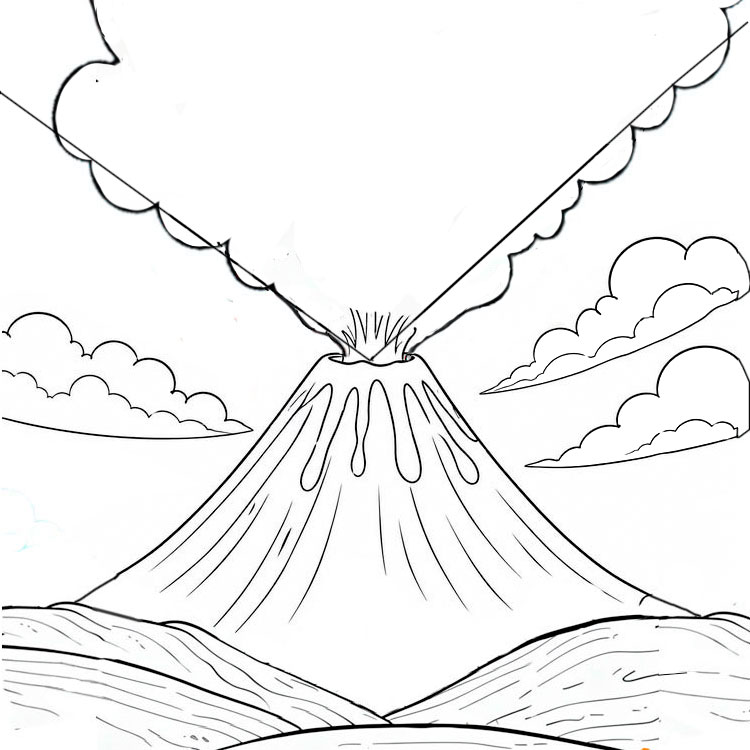
To make it easier to draw the top of the volcano, we’ll create two guide lines and sketch the outline of the left side of the ash plume.

Step 9
In the same way, we create the outline of the right side of the ash plume from our volcano.
Step 10
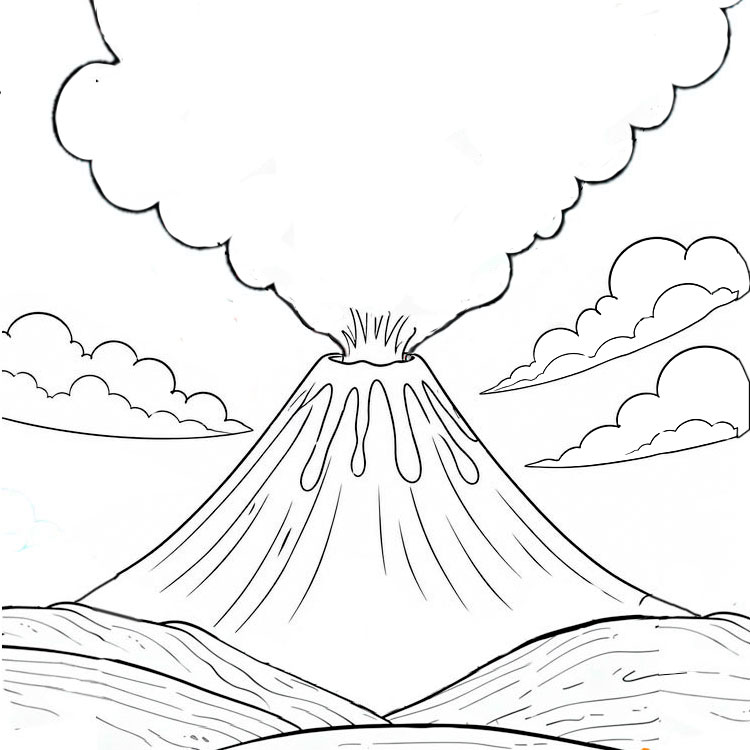
Remove the guide lines, leaving only the outlines of the ash plume around the volcano
Step 11
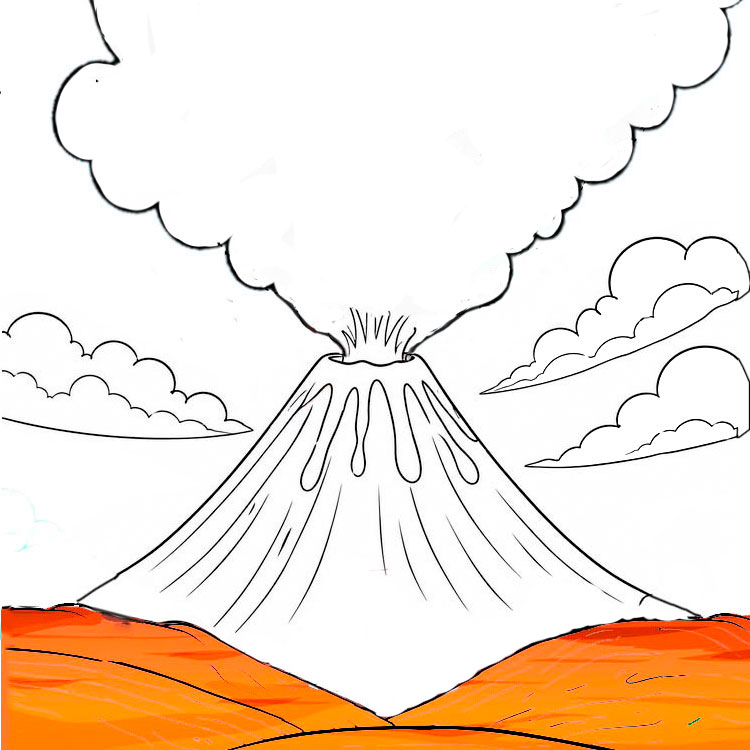
At this stage of the drawing, we begin to color the base of the volcano in light brown tones.
Step 12
Next, color the clouds blue and the volcano itself dark brown.

Step 13
And here we’re coloring the lava flow from the volcano in bright shades of yellow.

Step 14
And we’ll finish our drawing by adding some smoke plumes to the volcano.
How to draw a volcano (Option 2)

Step 1
The first step in drawing a volcano is to draw a triangle!

Step 2
Next, draw something resembling a “4-fingered hand”!

Step 3
Here we draw the right side of the lava base!

Step 4
In this step, we will draw the left side of the lava!

Step 5
Let’s draw the elevation of the ash part of the volcano!

Step 6
At this stage, draw a large cloud of ash!

Step 7
Inside the large ash cloud, draw a small ash cloud!

Step 8
To the right of the volcano, draw the base of the bush

Step 9
Also, to the left of the volcano, draw more bushes at their base!

Step 10
Let’s paint the bushes green and the lava part of the volcano!

Step 11
Let’s draw the mountainous part of the volcano!

Step 12
Next, draw the erupting part of the volcano’s crater!

Step 13
Let’s finish drawing the ash part of the volcano!