 Drawn light
How to draw a bus in will tell in this article! The name bus itself is derived from the abbreviation of the word combination omnibus car. The word omnibus, in turn, comes from the Latin omnibus – “all.” The history of this vehicle, which transports millions of people worldwide every day, began more than two hundred years ago.
The very first bus was designed in 1801. An unprecedented steam-powered vehicle rode through the streets of the English town of Camborne to amuse the crowds. Its inventor – Briton Richard Trevithick – also designed the first English steam engine. The vehicle accommodates up to 8 passengers, and a stoker stood on the footplate at the back. The novelty, throwing clouds of black smoke into the air, was steadily gaining the right to exist.
At first, they were stagecoaches or omnibuses. They were horse-drawn carriages with several seats. They were used for transportation within one locality or between cities. A little later, buses also appeared. Initially, they were designed for eight passengers and were powered by a steam engine.
How to draw a bus it’s a fun thing to do; follow our guidelines. Twenty-eight years later, in 1829, a perfected bus model carried 28 passengers and reached the highest speed of any vehicle. The rapid spread of electricity at the end of the nineteenth century also impacted buses. In 1886, the first electric bus hit the streets of London.
A bus is a non-rail motor vehicle used for passenger transportation according to traffic rules. There can be up to nine passengers in the cabin of one such vehicle.
Modern buses are maneuverable, and transport for tourist purposes has air conditioning and toilets. They are powered by fuel – gasoline, diesel, or gas. The first bus with an electric motor. On April 12, 1903, the first-ever bus as an urban public transport took place in London.
The Germans developed the ideas of the British. In 1895, the German factory Benz introduced the first bus with an internal combustion engine to the world. It looked more like an enlarged coach, had room for eight passengers, and could pick up speeds to 13 km/h. These cars were transported between three German cities: Dietz, Siegen, and Netfen.
Let’s get down to draw a bus!
How to draw a bus easy
Step 1
At the initial stage of drawing the bus, we create the outlines of the wheels!

Step 2
Next, draw the inner outlines of these two wheels!

Step 3
Let’s continue drawing by creating the exterior of the bus!

Step 4
Here we draw the outline of the second pair of wheels and the side windows as well!

Step 5
In this step, we draw the front and side bumpers and the outline of the front windshields!

Step 6
We are drawing the front of the bus and the rearview mirrors!

Step 7
We also draw small details: headlights at the front of the bus and at the top, as well as other small parts!
Step 8
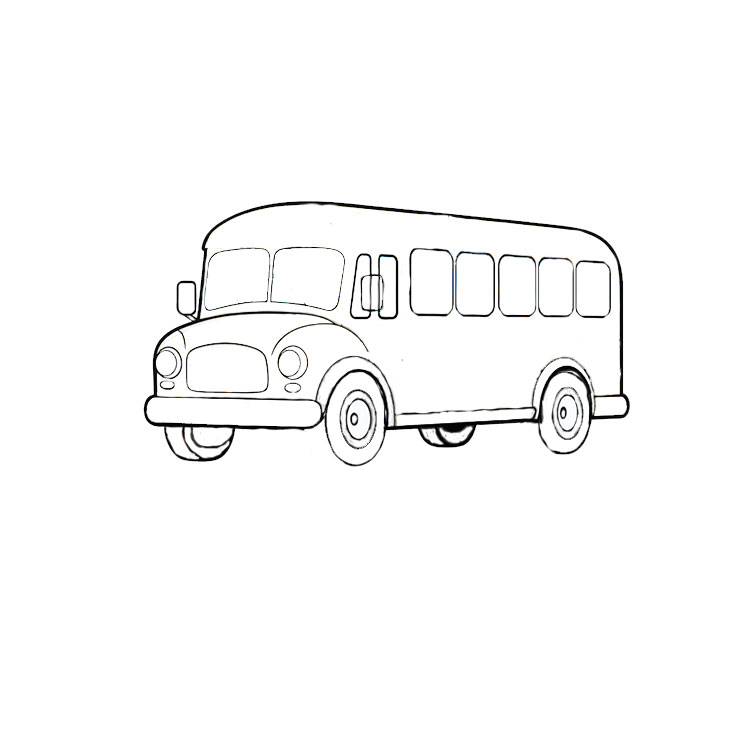
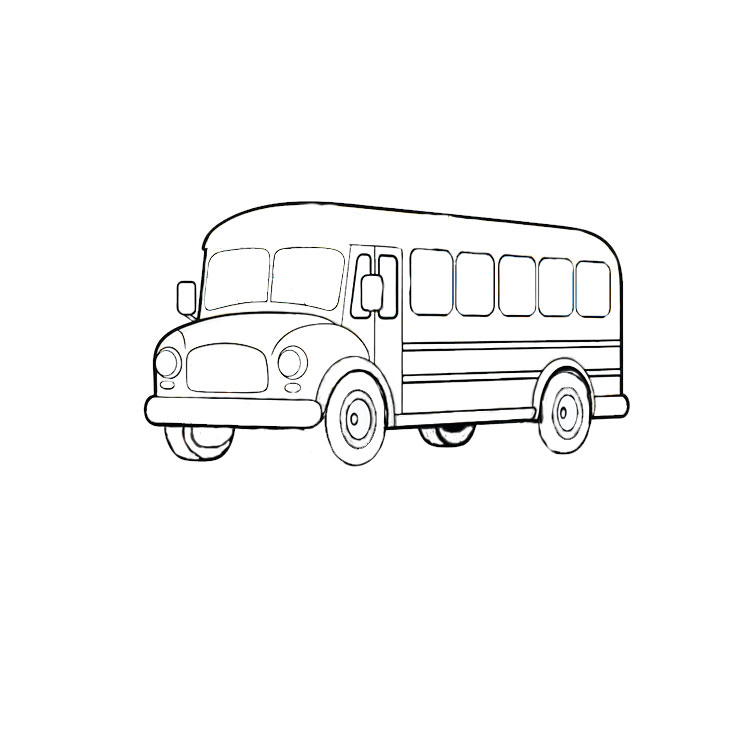
Here we erase unnecessary details from the rearview mirror and draw the side elements of the bus as two parallel horizontal lines!
Step 9
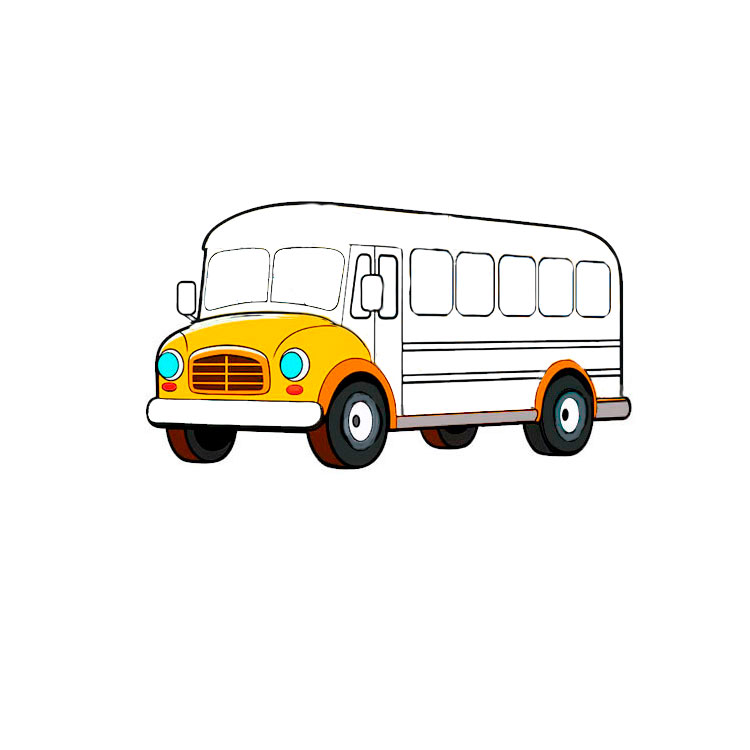
Let’s start coloring the bus from the front and the wheels!
Step 10
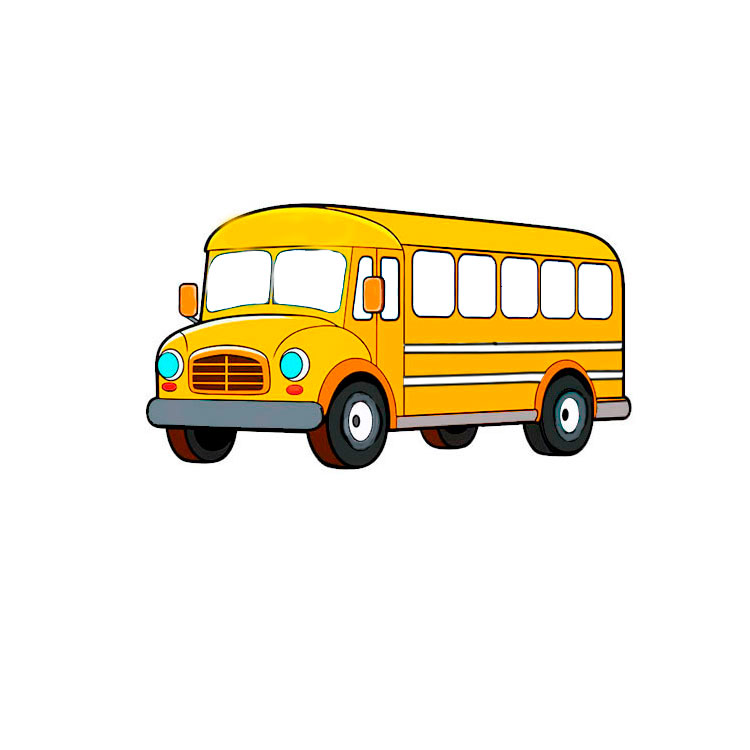
In this step, we coloring the side and center of the bus!
Step 11
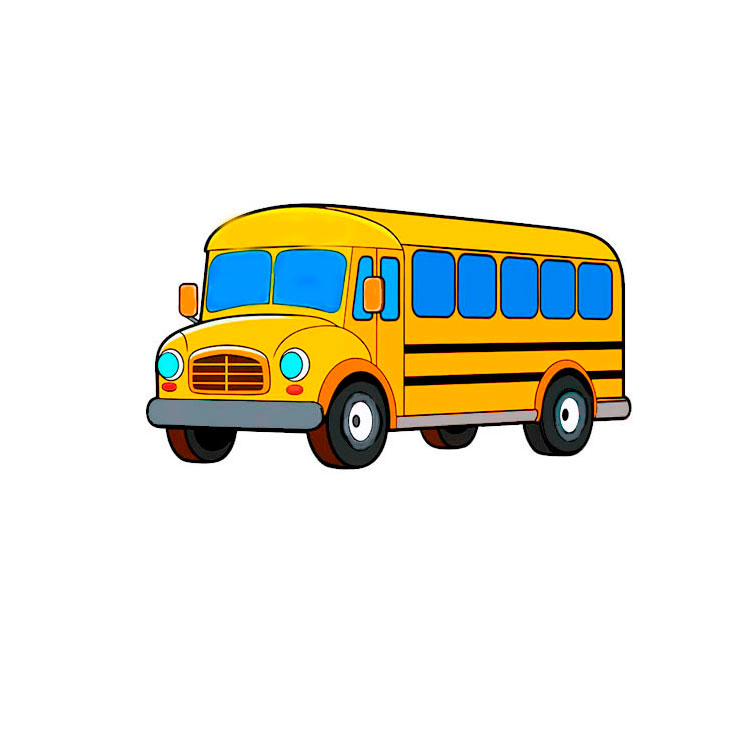
Let’s finish coloring the bus by drawing blue windows on our lovely bus!